CPP vs PCPP — What's the Difference?
Construction Phase Plan vs Pre-Construction Phase Plan — what's the difference, who writes them, and when are they needed? A CDM 2015 guide for contractors.
4 min read
TL;DR
Construction Phase Plan vs Pre-Construction Phase Plan — what's the difference, who writes them, and when are they needed? A CDM 2015 guide for contractors.
The Simple Answer
- PCPP (Pre-Construction Phase Plan) — written by the Principal Designer before work starts. It covers design risks and high-level planning.
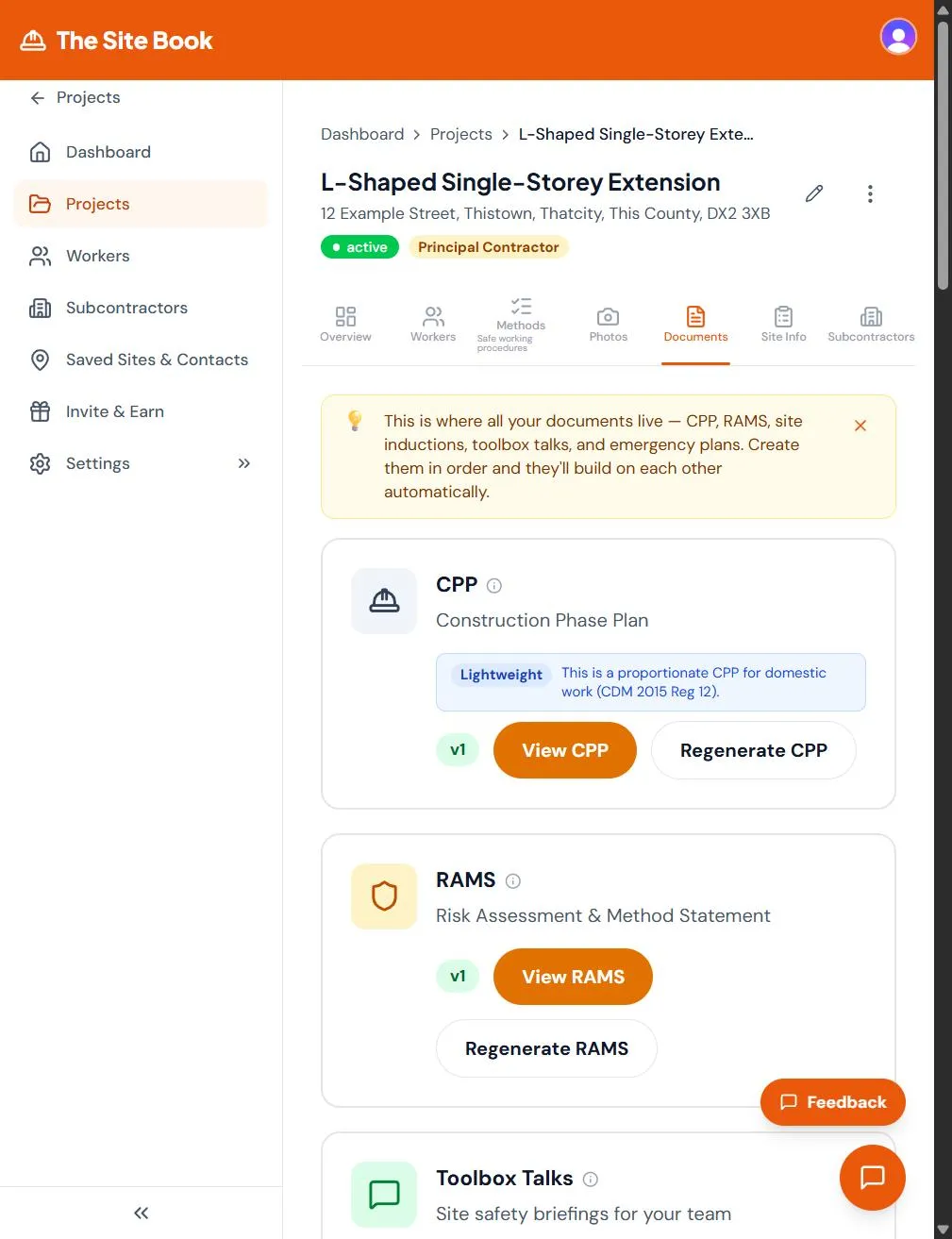
- CPP (Construction Phase Plan) — written by the Principal Contractor (or contractor) during the work. It's the practical H&S plan for the build.
Who Writes What?
| Document | Written By | When |
|---|---|---|
| PCPP | Principal Designer (architect, engineer, or designer) | Before construction starts |
| CPP | Principal Contractor (main contractor or builder) | Before work starts, updated throughout |
What's in a PCPP?
The PCPP (also called the Pre-Construction Information or PCI) includes:
- Description of the project
- Client requirements and management arrangements
- Environmental restrictions (protected species, TPOs, archaeology)
- Existing site hazards (asbestos, contamination, services)
- Design risks and how they'll be managed
- Health and safety file information
It's mostly information — what the contractor needs to know before pricing and starting work.
What's in a CPP?
The CPP is the contractor's practical safety plan:
- Site rules and induction requirements
- Welfare facilities (toilets, drinking water, rest area)
- Emergency procedures (fire, first aid, accident reporting)
- Site-specific risks and controls
- Method statements and RAMS for key activities
- Site layout and traffic management
- Consultation and communication arrangements
- Monitoring and review procedures
It's a working document — you update it as the job progresses.
Do I Need Both?
If the project is notifiable to HSE (>30 working days OR >500 person-days), yes — you need both under CDM 2015.
For smaller projects, you still need a CPP. The PCPP might be as simple as a brief from the client or designer.
Domestic Projects
For domestic clients (homeowner having work done on their own house), CDM 2015 doesn't apply. But you should still write a CPP as good practice — it shows you've thought about safety and protects you if something goes wrong.
Example Scenario
Project: Single-storey rear extension on a domestic property.
- PCPP: Architect provides drawings, notes asbestos in existing garage roof, warns of foul drain running across site.
- CPP: Builder writes a plan covering welfare (portaloo), emergency contacts, site rules, excavation procedure, asbestos removal by licensed contractor before demolition, services location before digging.
The PCPP told the builder what to watch out for. The CPP is the builder's plan for managing those risks.
What Happens to the PCPP After You Create the CPP?
The PCPP doesn't get filed away and forgotten once the CPP is written. The two documents have an ongoing relationship throughout the project lifecycle.
The Principal Designer creates the PCPP during the design phase, gathering information about site hazards, design risks, and anything the contractor needs to know before starting work. When the Principal Contractor receives the PCPP, they use it as the foundation for their CPP.
As the project progresses, new information emerges. Perhaps the groundworks reveal unexpected contamination, or the structural engineer changes the steel design. The PCPP should be updated by the Principal Designer to reflect design changes, and the Principal Contractor should update the CPP accordingly. In practice, the two documents evolve together — the PCPP feeding design-side risk information into the CPP, and the CPP feeding practical site experience back to the design team.
At the end of the project, key information from both documents feeds into the Health and Safety File — the handover document that tells future owners and maintainers about residual risks, hidden services, and anything else they need to know to work safely on the building in future.
Who Creates Each Document?
Getting this right matters because CDM 2015 places specific legal duties on specific roles:
- PCPP (Pre-Construction Phase Plan) — created by the Principal Designer. This is typically the architect, lead designer, or a CDM consultant appointed by the client. Their job is to gather pre-construction information, identify design risks, and package it all into a document the contractor can actually use. On smaller projects without a formal Principal Designer appointment, the designer or client may put together a simpler version covering the essential site information.
- CPP (Construction Phase Plan) — created by the Principal Contractor. On a multi-contractor project, this is the main contractor. On a single-contractor domestic job, it falls to the contractor doing the work. The CPP must be in place before the construction phase begins — CDM 2015 Regulation 12 is clear on this.
A common mistake is assuming the same person writes both. They shouldn't — the PCPP reflects the design team's understanding of risks, while the CPP reflects the contractor's practical plan for managing them. That separation is deliberate under CDM.
Importing Your PCPP into The Site Book
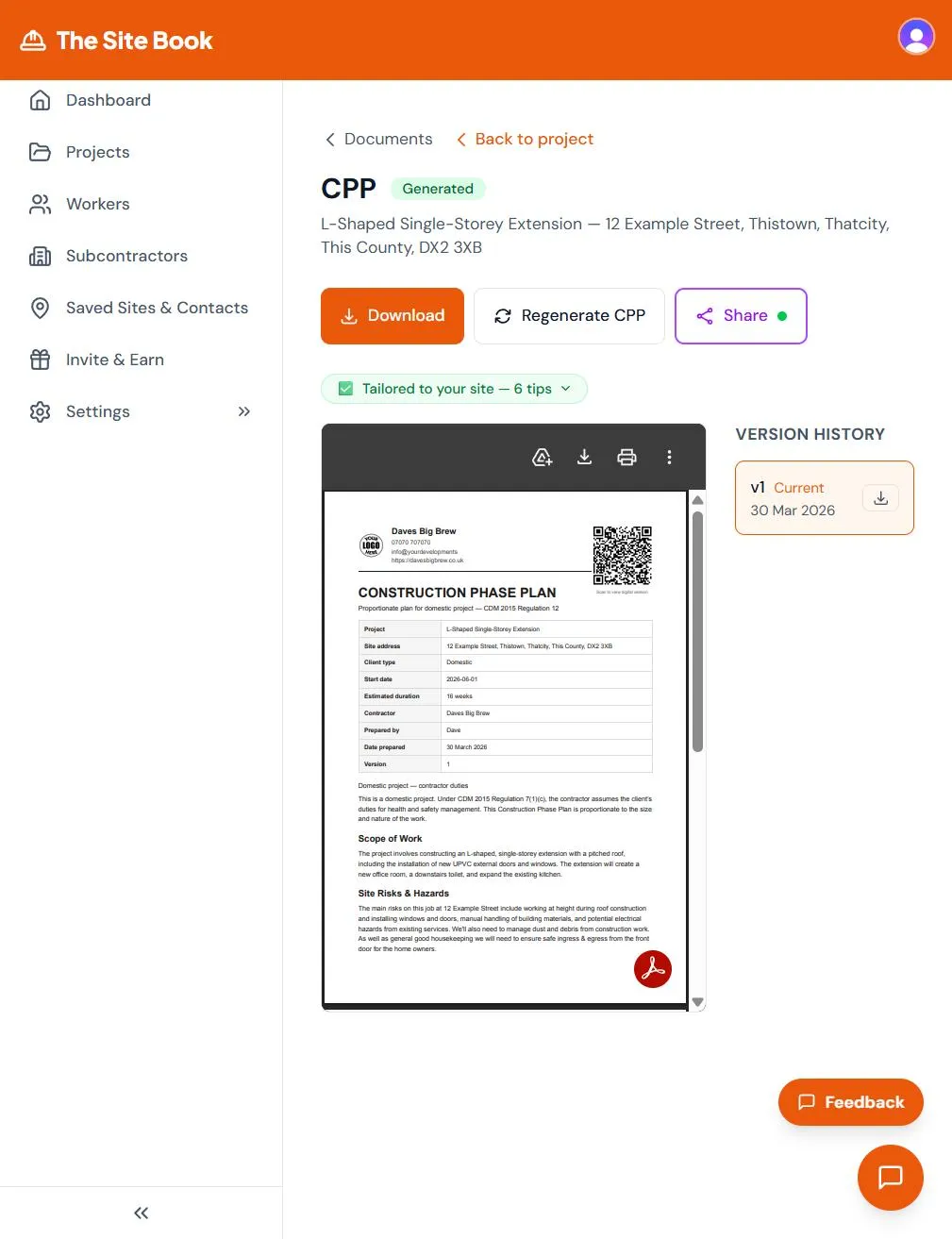
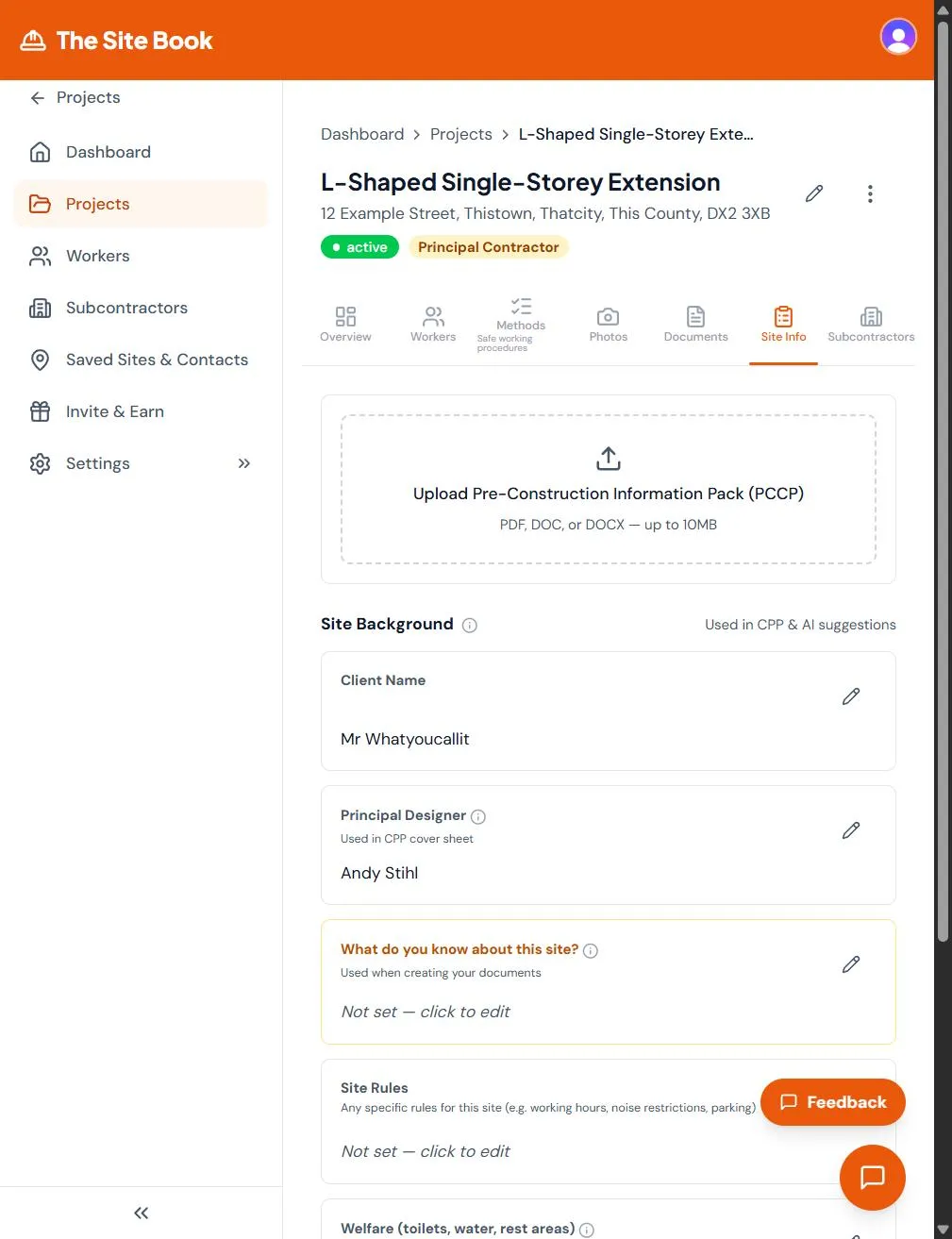
The Site Book lets you upload an existing PCPP document and automatically extract key information — site hazards, design risks, environmental constraints — to pre-populate your CPP. Instead of re-typing everything from the designer's pack, the tool reads the PCPP and maps the relevant sections across, saving you time and reducing the chance of missing something important.
Ready to sort your compliance?
The Site Book handles RAMS, CPP, site inductions, and everything else. All in one place.
Try The Site Book →